Civic: Transforming North Edinburgh's communities
Civic is an innovative app designed to foster a sense of community, promote engagement, and reduce disruptive behaviours in the north of Edinburgh. This app aims to address the area's issues by transforming it into a welcoming and safe environment for all residents. Through its features, Civic seeks to educate and connect individuals, bringing joy to the community and reshaping the perception of previously troubled areas into vibrant and inclusive neighbourhoods.
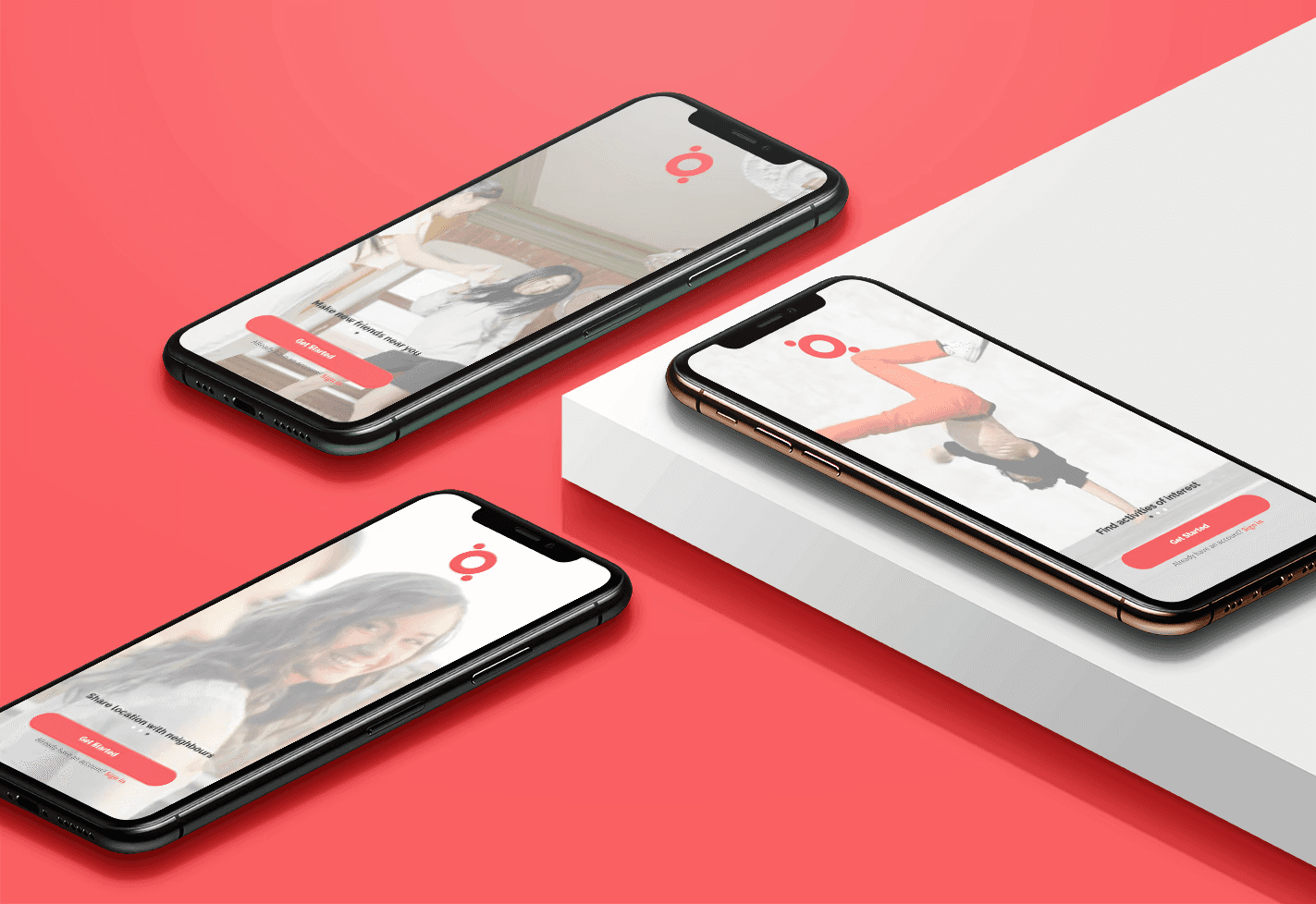
The north of Edinburgh, known for its beautiful green spaces, Cramond Island, and a scenic shore, is strategically located near key facilities such as Edinburgh College, Western General Hospital, the Village Hotel, and several large supermarkets. Despite these advantages, the area struggles with high levels of disruptive behaviour and a lack of community engagement, resulting in safety concerns. The creative challenge was to develop a solution that would not only improve safety but also enhance the attractiveness of the neighbourhood.
Design thinking process
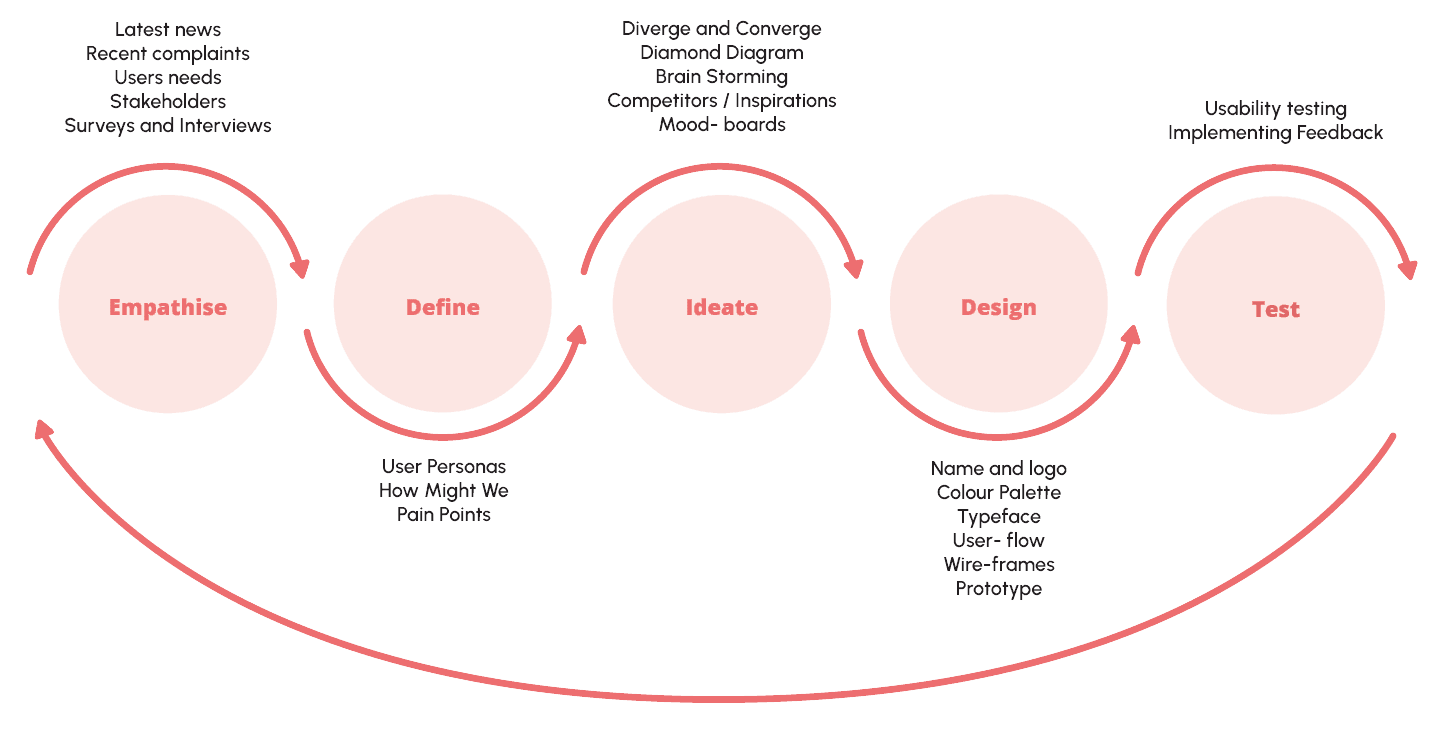
Empathise:
The goal of this phase is to gain a deep understanding of the users' experiences, needs, and motivations. Understanding the community was essential for designing a solution that truly addresses their problems.
Latest News & Recent Complaints
Analysing recent news articles and community complaints highlighted the prevalence of criminal activities and safety concerns in the area. The analysis revealed a consistent pattern of disruptive behaviours, particularly among younger residents, which has significantly impacted the sense of security and community cohesion.
Users' Needs & Stakeholders
The key stakeholders that need to be involved include local schools, the police, the council, and social centres that offer various activities. Among the most relevant community activities are centres such as Art Buds, Arts Spartans, football programmes, and the Granton Hub. Their initiatives play a crucial role in fostering connections within the neighbourhood, which is our target audience. Conducting interviews and surveys with stakeholders would have provided deeper insights into the needs and challenges of the community; however, despite my efforts, nobody seemed interested in getting involved.
Interviews Conducted
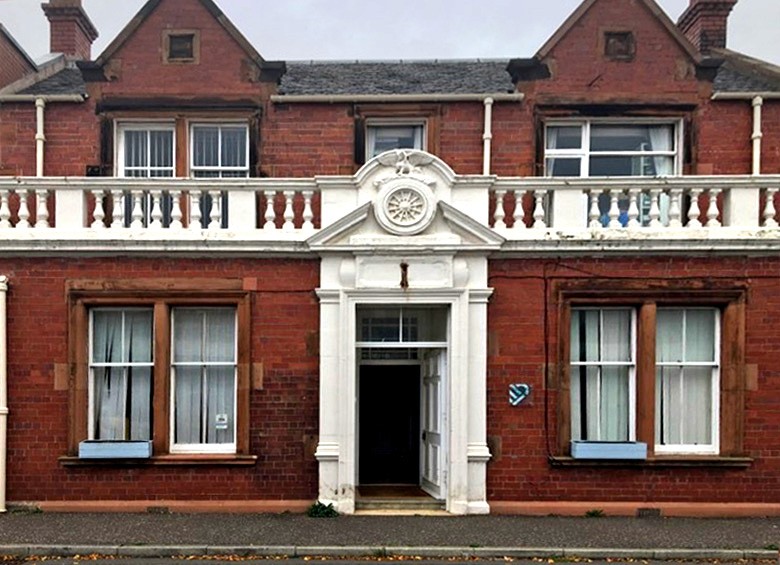
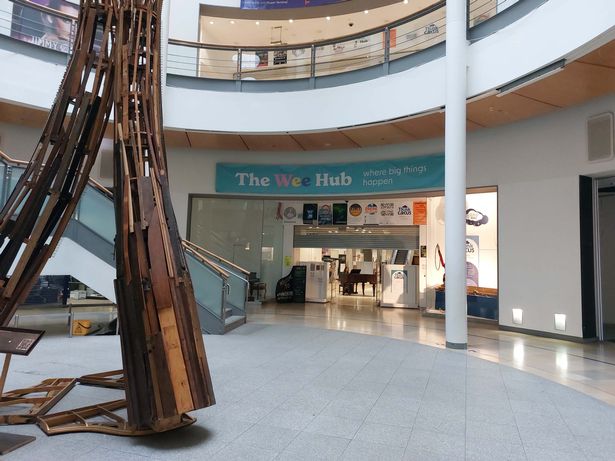
Granton Hub: Although I sent emails to various organisations, none responded. This lack of response suggested a disinterest in engaging with younger generations, potentially explaining why teenagers feel excluded from the community. When I visited the Granton Hub, I found it closed and was unable to obtain their schedule, which was both frustrating and demotivating. This experience led me to suspect that the community might be experiencing similar feelings of exclusion.

Council Officer: Finally, after persistently emailing various organisations, only an anonymous housing officer from North Edinburgh Council replied. This 45-minute conversation confirmed my findings. The officer explained that the issues with young people were historically linked to a lack of resources and generational problems. However, during the pandemic, a new generation of middle-class teenagers began to take pride in misbehaving and vandalising. This behaviour is now attributed more to social trends than to a lack of resources. He also noted the challenges in dealing with under-sixteen offenders and the frequent changes in police officers assigned to the area. His insights underscored the need for consistent community engagement and better support from local institutions.

Tribe Porty: This community centre, located in a different neighbourhood, is a thriving hub of individuals working together. Its audience primarily consists of people over 25 who are already engaged with their community, contrasting with my target audience of disengaged individuals under 25. During the interview with Danielle Trodeau, the founder, I realised that including engaged adults in my target audience was essential so they could encourage their children to get involved. Additionally, one of her stories about creating a space for her hobby at a young age reinforced the idea that addressing needs is crucial for fostering community engagement.
General Survey Results:
Given the difficulty in obtaining information from certain institutions, a survey was sent out to the neighbours. The results reiterated the previous findings:
Women over thirty are the most engaged with the community, while troublemakers are typically people under 25, often their children. Targeting these two groups is crucial.
Despite volunteer respondents being already engaged with the community, nearly half of them said they felt a lack of a sense of belonging. This indicates that even active community members do not feel fully integrated.
While changes are necessary to encourage greater care for the area, there are positive aspects and locations that people appreciate, which could attract tourism.
As suspected from the previous investigation, the charts revealed that social centres lack exposure, confirming the need for better promotion and engagement strategies.
To specifically understand those under twenty-five, another survey was distributed by placing advertisements on lamp posts, bus stops, schools, and social media. The only four responses received highlighted a need for increased engagement with this group. It became clear that negative stereotypes are causing younger generations to feel discriminated against, which in turn leads to anger and a misguided self-belief that hinders their growth. The insufficient efforts to address these issues are disheartening, and it's no surprise that these young people have lost faith in themselves, as it seems that nobody believes in or cares about them.
Relevant insights
Given that we are undertaking this endeavour on our own, it is essential to cultivate a collaborative spirit among neighbours to effect positive change. By promoting engagement, we can foster a sense of ownership and deter disruptive behaviours. The insights gained from surveys and interviews highlight the need to address both the needs of engaged community members and the disengaged younger generation to build a cohesive and safe community.
Define
In this phase the focus is on synthesising insights gathered during the Empathise phase to clearly articulate the core problems and user needs, creating a very well-defined problem statement that guides the design process.
User personas
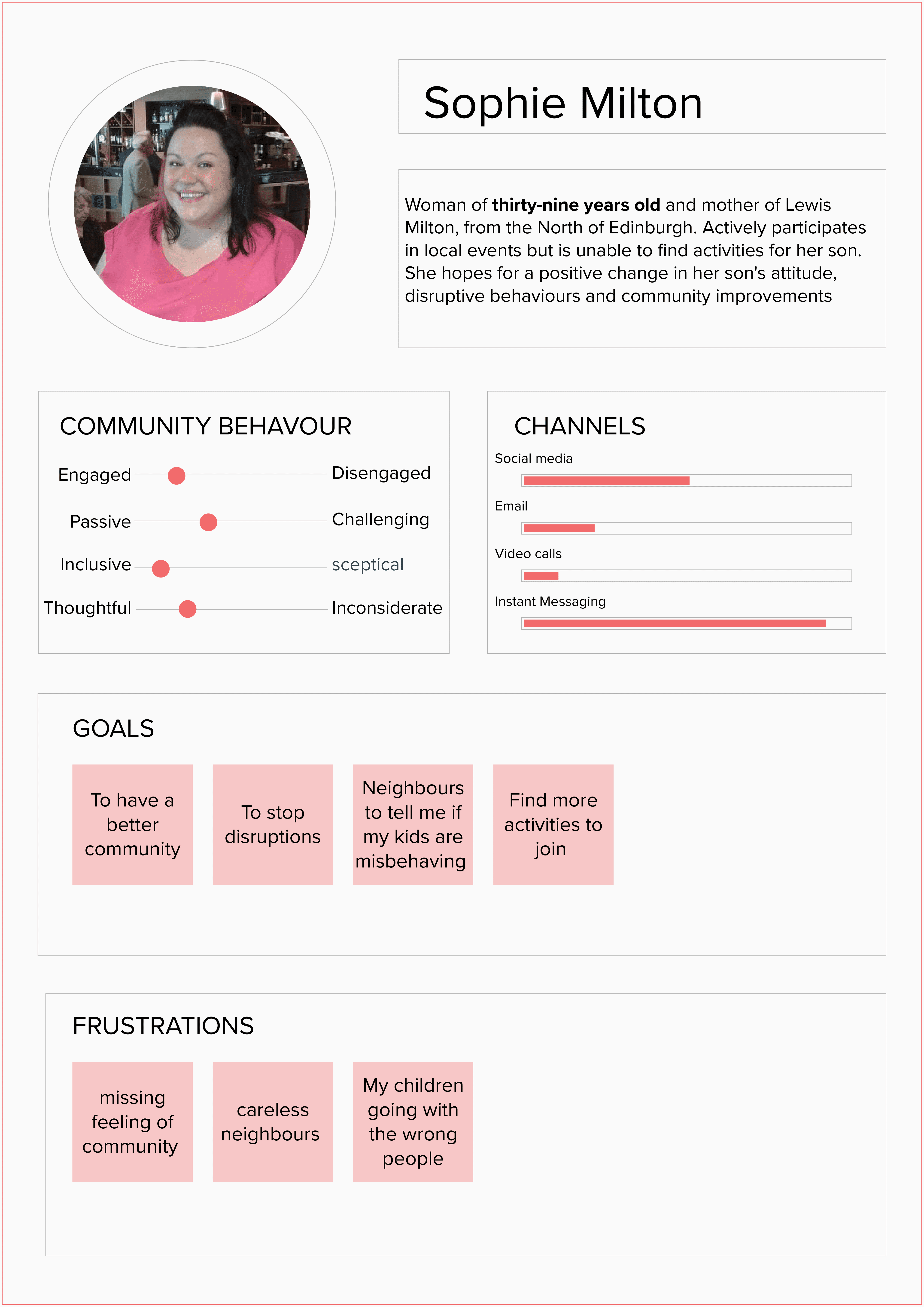
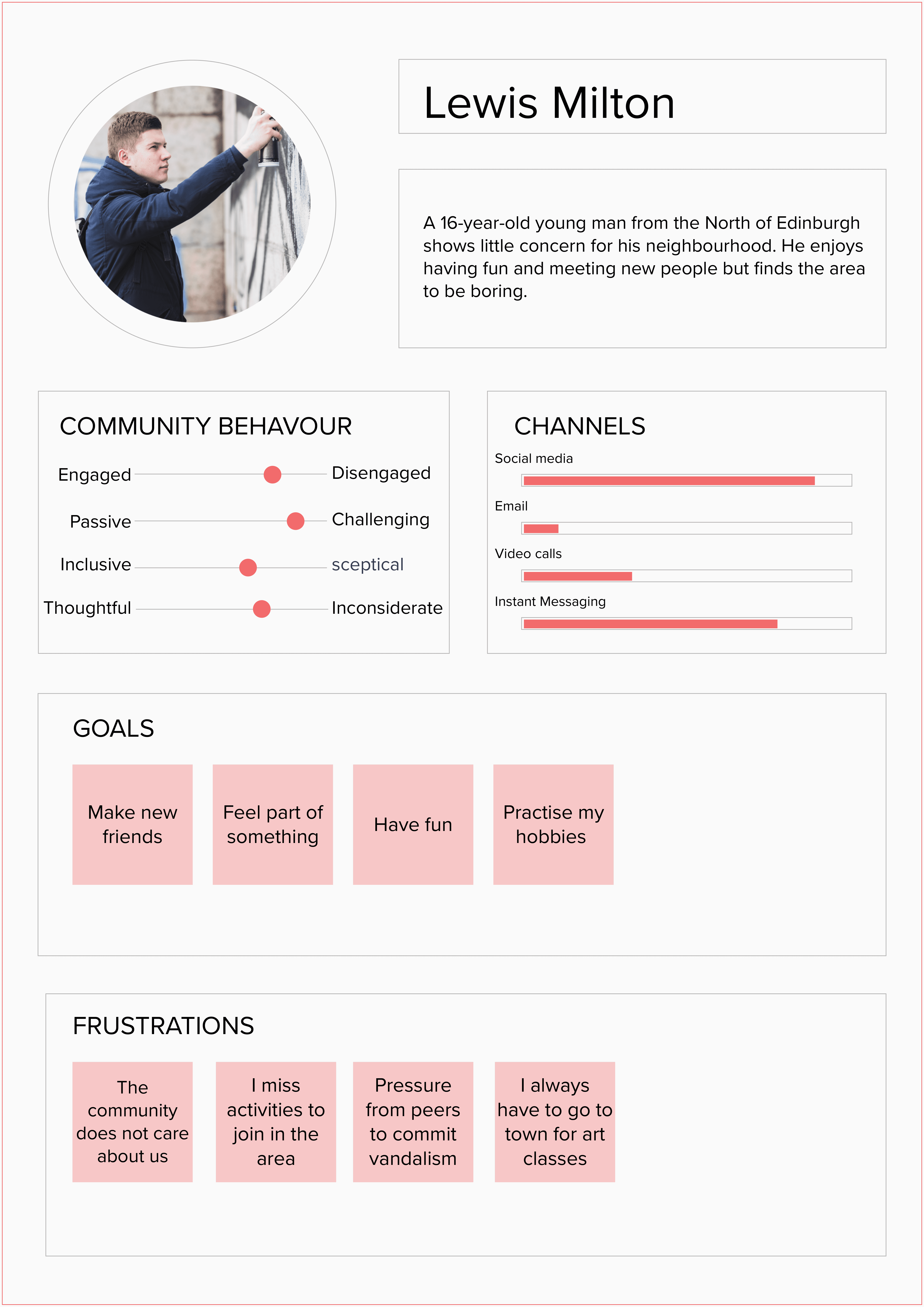
Two user personas of different ages were created to represent the different segments of the community, which was crucial to help tailor the app’s features to the community's needs.
A 39-year-old woman who actively participates in local activities but struggles to find suitable activities for her son. She hopes for a positive change in her son's attitude and is frustrated by his association with the wrong people and the disruptive behaviours in the neighbourhood. She wishes her neighbours would inform her if her son becomes involved in any vandalism in the area.
Lewis 16-year-old son enjoys having fun and meeting new people. However, in the area, he repeatedly encounters the same individuals who pressure him into committing vandalism. He wishes to feel a sense of belonging but feels that the community doesn’t care about him. Additionally, he dislikes having to travel to the city centre for his art classes.
How might we & pain points
Questions were framed to identify ways to make the area safer, promote its best aspects, and engage teenagers in positive activities. Key issues such as safety at night, lack of institutional action, and vandalism were investigated and identified in more depth through research, leading to the following statements:
In order to make people feel safer, we might increase good connections in the area.
In order to attract more people to the area, we might reframe North Edinburgh’s perception.
In order to change Norths Edinburgh's perception, we might promote the best aspects of the area.
In order to help teens use activities offered in the area, we might boost social centres' visibility.
In order to avoid disruptions, we might keep people busy with hobbies.
Ideate
In this phase the focus is on generating a wide range of creative ideas and potential solutions to address the problem defined in the previous phase, encouraging innovative thinking and exploring various possibilities.
Diverge & converge
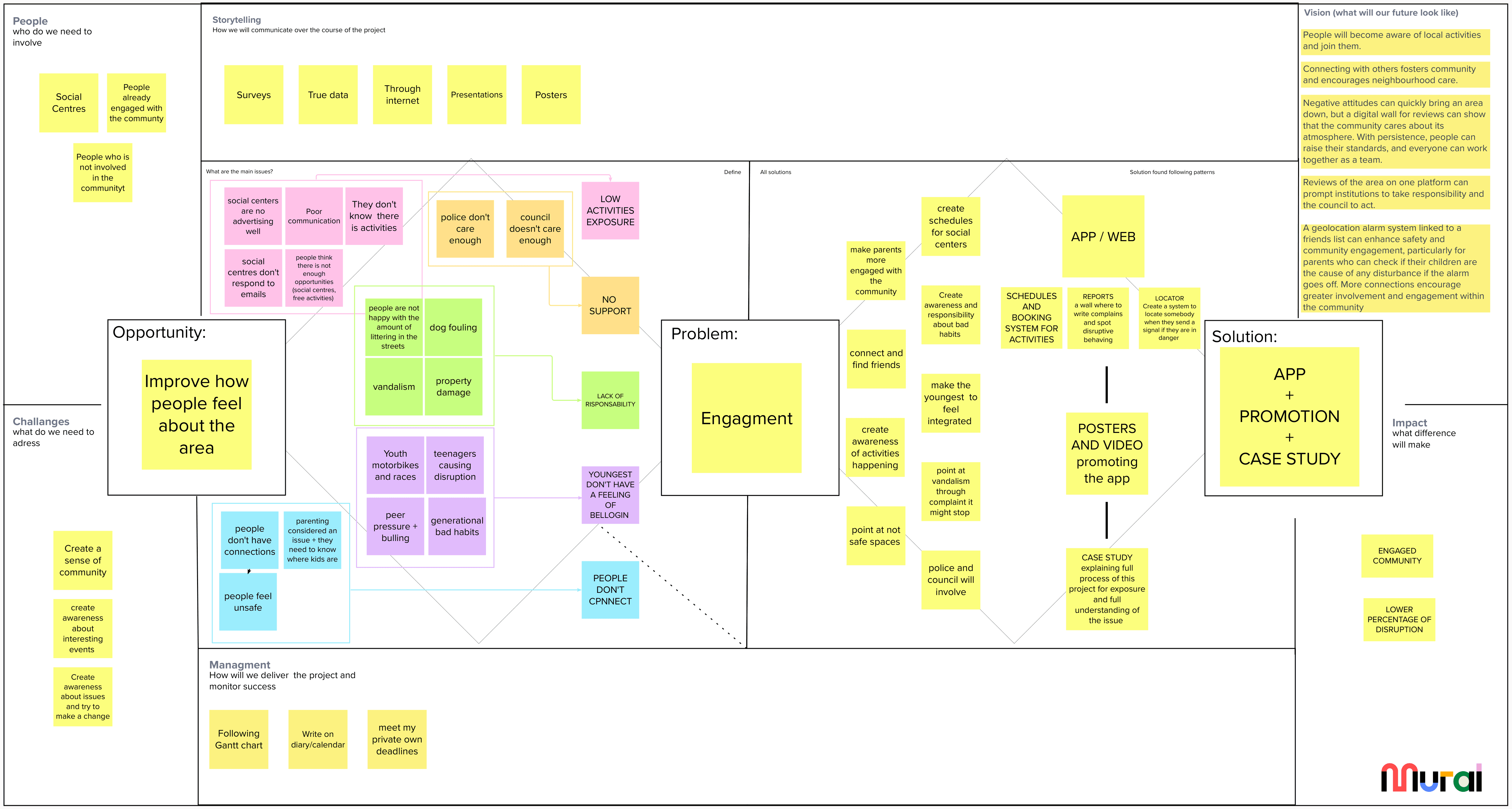
With all the previous findings, a brainstorming session was held, generating a wide range of ideas that were then narrowed down to the most feasible solutions.
Diamond diagram & brainstorming
Used to structure the ideation process, this method helped narrow down all the ideas to what would become the beginning of a final solution. The result was an app with this key features:
Access to local activity listings.
An integrated local social media feature to connect with neighbours.
An alert system notifying of individuals in danger, enabling the user to check on them and contact authorities if needed.
Effective promotion and advertising will also be essential to ensure the app reaches and engages its target audience.
Moodboards & inspirations
Moodboards for visual inspiration were created based on the emotions of fun and engagement that we needed to promote and put in practice. Additionally, successful platforms were analysed, and their most relevant features were considered:
Village Gym app, known for its schedules and intuitive user interface.
Alert Cops app, which offers safety features.
The popular community Facebook group for the area, where people find new connections and engage.
Design
In this phase we translate the ideas generated during the Ideate phase into tangible solutions. This involves creating detailed design concepts, visualising and refining prototypes, and ensuring that the proposed solutions effectively address the problem and meet user needs.
Name & logo
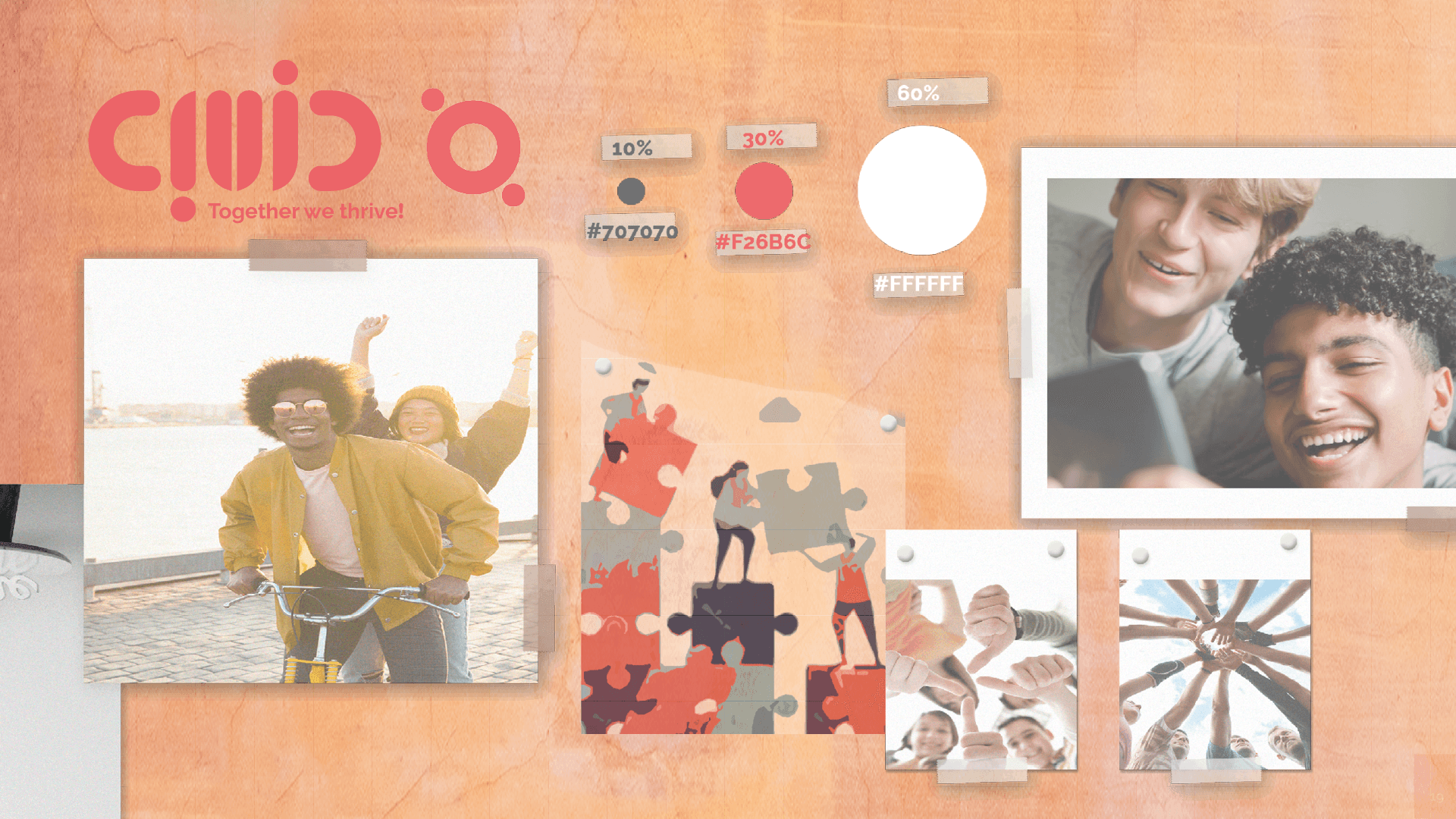
"Civic" was chosen for its connotations of community and municipal engagement. The logo’s design subtly suggests two people hugging, symbolising connection and support.
Colour Palette
Following the 60-30-10 rule, the colours chosen were Civic Coral , white , and light grey to inspire fun and social interaction.
Typeface
The font choice had to be both legible and appropriate for the app’s tone. Raleway Bold and Extra Bold were selected for their loud but friendly appearance, making them suitable for headlines. Source Sans Pro Regular and Bold, a sans-serif font specifically designed for user interfaces, was chosen for its approachable, rounded appearance and legibility in body text. Raleway Bold for headlines and Source Sans Pro for body text to ensure legibility and an approachable appearance.
User Flow, Wireframes & Prototype
Once all the steps the user needs to complete a specific task within the app were mapped out and the user journey was clear, the wireframes were defined. These wireframes served as the foundational blueprints, detailing the structure and layout of each screen. From these sketches, a final prototype was designed, integrating interactive elements to simulate the user experience and allowing for comprehensive testing and feedback.
Testing
The prototype has been tested on a small scale with locals, who are very pleased with the idea and its goal. They believe it will solve the neighbourhood's issues. Civic is now awaiting review by the local Member of Parliament to support its adoption. Once introduced in north Edinburgh and proven successful, it could be expanded to other UK areas and implemented globally, improving neighbourhoods everywhere. However, further testing will be conducted to identify areas for improvement and make necessary adjustments.
Navigating the complexities of community engagement presented several challenges throughout the project. Initial obstacles included difficulty in contacting stakeholders and securing meaningful responses, which were resolved through persistent follow-ups and direct outreach to community centres in the North of Edinburgh and other areas to make comparisons. Engaging the target audience, particularly teenagers, remains a challenge, addressed through targeted outreach and the integration of appealing features for younger users. Despite these obstacles, Civic is ready to make a significant impact in the North of Edinburgh by fostering a stronger sense of community and enhancing safety. In the short term, we anticipate increased community engagement and a reduction in disruptive behaviours. Looking ahead, Civic aims to reshape the area's perception, setting a benchmark for successful, community-driven improvement initiatives.These changes in the neighbourhood will highlight the diverse benefits for tourism, attracting visitors and adding another positive outcome to the project.